- Active: Nashville (Davidson County)
- Origin: Indianapolis, IN
- Region: Middle
- Medium: Photography
- Facebook | Instagram | LinkedIn
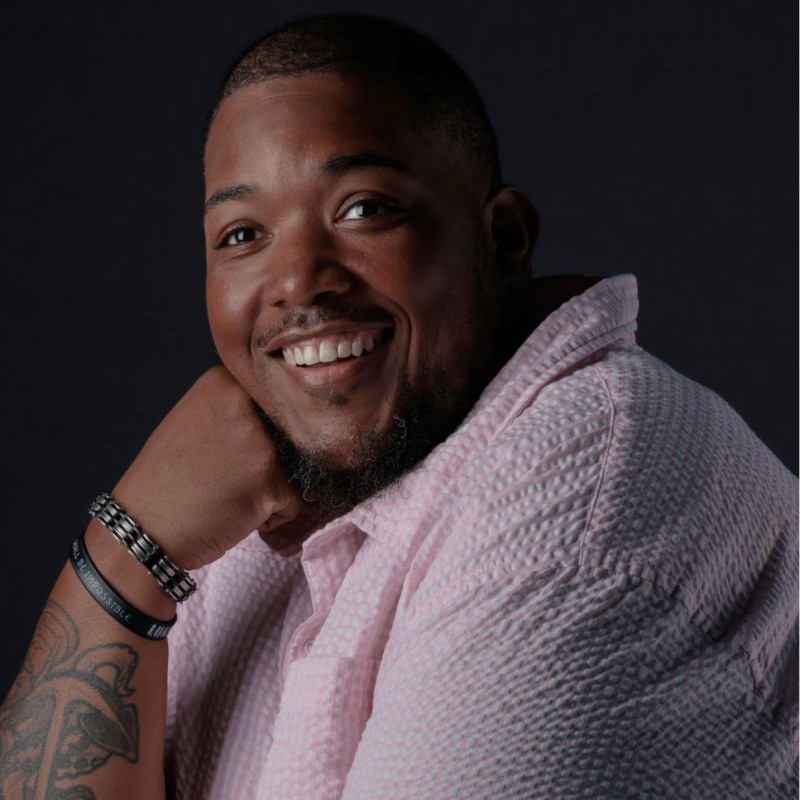
Armon Means
Armon A. Means is currently an Assistant Professor of Photography and Visual Arts in Nashville, where he also serves as Studio and Safety Coordinator for the Watkins College of Art at Belmont University. He received his BFA in Photography from The Cleveland Institute of Art (’99) and an MFA in Photography from Cranbrook Academy of Art in Bloomfield Hills, MI (’02). He has previously taught at Coastal Carolina University, Kansas State University, and (Independent) Watkins College of Art. Means also studied at the Lacoste School of the Arts located in Lacoste, France, and the School of the Arts in Budapest, Hungary. An exhibiting fine art photographer and educator since 2003, he has exhibited widely in group exhibitions in Thailand, France, Hungary, and numerous states; primarily in the Southern, Eastern, and Midwestern regions, where he has also been active as a visiting artist at multiple venues. His work centers on ideas of cultural concerns, minority identity, motorcycle culture, and perceptions of safety and security, while also finding roots in photographic history. He is represented in numerous collections across the United States and Germany.
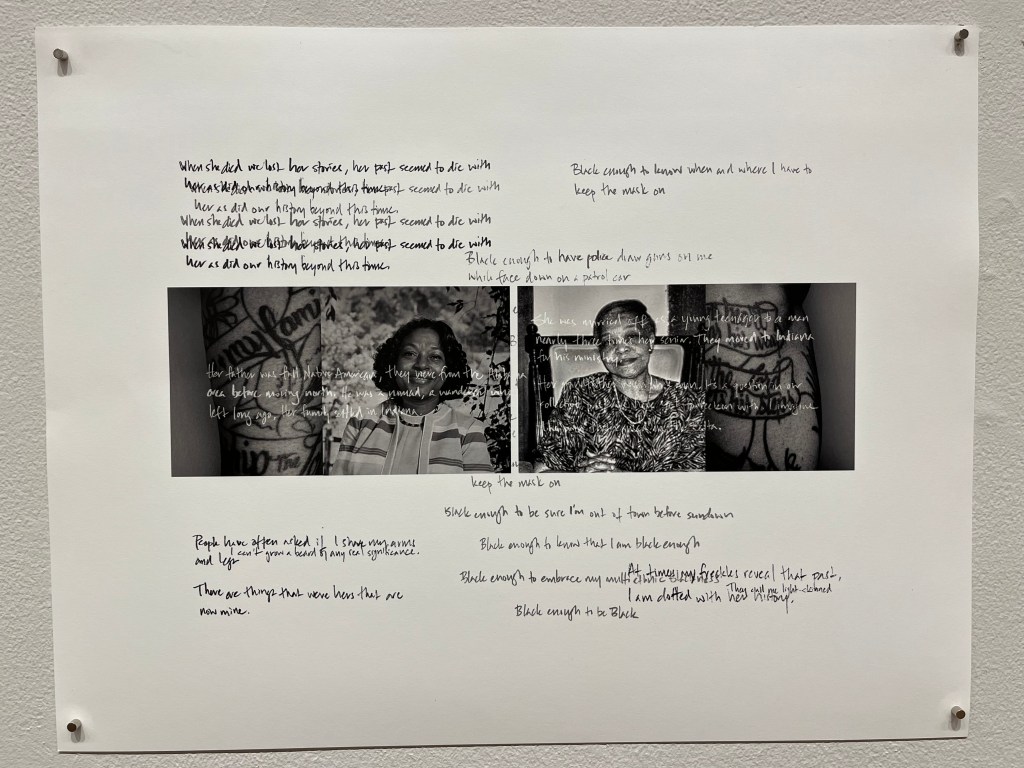
“My recent body of work serves as a visual and conceptual exploration of grief and loss, articulated through manipulated photographs and text. These pieces navigate both personal and collective experiences of mourning, set against the backdrop of the once-prevailing idealism of the ‘American Dream.’ This tension–situated between a sense of communal belonging and the realities of cultural disillusionment–forms the connective tissue of my work.
As both artist and observer, insider and outsider, I explore the complexities of selfhood, particularly within racial, cultural, and subcultural contexts. Drawing from my own position within the Black diaspora and subcultural spaces such as the motorcycle community, I examine identity, belonging, and the intersection of personal history with broader sociopolitical landscapes. From the Mississippi Delta’s turbulent cultural legacy and history of erasure, to questions of safety and representation, my work seeks out moments of connection and commonality.
My practice engages with the intersections of identity, authorship, and visibility, searching for points of resonance and shared humanity across seemingly disparate experiences. By positioning myself as both subject and witness, I aim to create space for reflection and dialogue–where images become sites for examining how we understand ourselves, one another, and the institutions that shape our lives.”
 CRAFTING BLACKNESS
Leave a comment