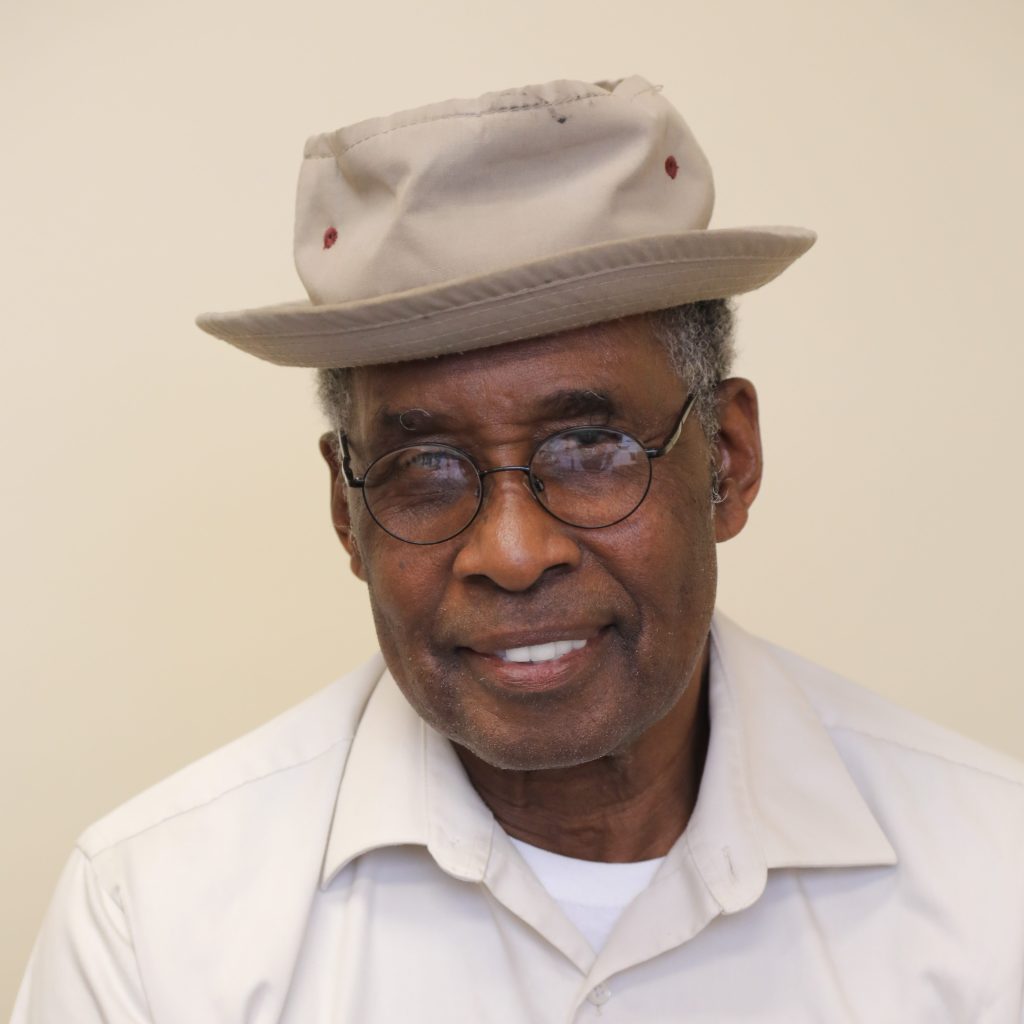
- Born: August 20, 1943 (Tallahassee, Florida)
- Active: Culleoka (Maury County)
- Region: Middle
- Mediums: Peach Pit Carving
- PBS Indies Video Mr. Smith’s Peach Seeds
Roger Smith
“I was born August 20, 1943, in Tallahassee, Florida. At an early age, we moved to Maury County, Tennessee. Here I attended a one-room school house, called Parks Station Elementary School. The school was located between Columbia and Lewisburg, Tennessee. Grades 1 to 8 were taught at this school, by one teacher. Since there were no buses for the colored children, we had to walk two miles or more to get to school. Our playground was a field with flat limestone rocks and prickly pears, surrounded by cedar trees and pivot bushes. Our water came from a well pump that produced sulfur water. There was an outhouse for the girls and one for the boys. During recess, the younger children would play games such as skipping rope, playing tag, seesaw, or ring around the roses. However, the older children would play baseball if someone was fortunate enough to bring an airball or a rubber ball from home. Boy oh boy, we knew we were blessed. Some of the time we had to improvise, using a sock that was packed with rags that were tied very tightly together. Believe it or not, it served the purpose for the game that we were going to play. A wooden plank or a straight stick was used for the bat. Nevertheless, baseball was the major sport for elementary kids–boys and girls.
During the era of segregation, no organized baseball existed in the colored high schools, until the mid or late 60’s. However, this didn’t deter the love for baseball in the rural communities. From early years until the 1960’s every colored community had its own baseball field, located on farmland, that was set aside for that purpose. Let’s take a look at “our baseball fields”: Behind home plate, three or four poles that were 10 feet to 12 feet high were erected, and they were covered with chicken wire, which was used to stop the wild pitches or foul balls. The rest of the field was precisely laid out from the pitcher’s mound to home plate, which measured 60 feet 3 inches. From home plate to first base, it was 70 feet 3 inches. From home plate to second base, 127 feet 3 inches, from home plate to third base, 70 feet 3 inches. Finally, there was no outfield boundary or a wall, just open space. Some of the better teams had uniforms with logos or names on them. Some of the teams had names like the “hornets,” “blue jays,” “Eagles,” “Reds,” or other chosen names. The country players, who didn’t have any particular names just played in their farms clothes. Each team had a manager, as well as an individual whose job was to schedule the games. The season lasted from April to October. Most games were played on Saturdays, because in those days, most of the players were farmers and church-going people. This made Saturday the best time to play baseball. A well-respected person from the community was chosen to be the umpire. The two teams would take to the field. The guest team was always the first to bat. The umpire would yell “play ball” and the game would begin. Although we had umpires, a close call for a game would often be disputed, and arguments would erupt. The arguments were quickly resolved, because everyone wanted to play ball. Spectators would stand or sit on the ground. Some would even bring chairs or blankets to sit on. Good food and drinks were always available. It was nothing to have hotdogs, fried chicken, homemade pies, and sometimes, homemade ice cream. More than likely a little spirit water (boot leg whiskey) would be sold outside the baseball field or some secret place. The biggest event in the rural communities was baseball. Visiting teams were always welcomed. Although segregation was still there, some semi-pro colored teams like the Huntsville Hawks, The Birmingham Black Bears, the Memphis Red Socks, or the Nashville Monarchs would come to town to play. These were just a few of the well-known teams that I remembered. As baseball continued to grow during segregation, a colored park known as Fairview Park, became the first park that had electric lights. Since this field had lights, this changed the whole dynamics of baseball, because it could now be played at night and during the week. Although each town had their own superstars, most of the emphasis was placed on the pitchers and the home-run hitters. Speed and the ability to catch played a major part for these superstars. Maury County was blessed to have many superstars, who were called up to play with the professional farm teams, like the St. Louis Cardinals, the Pittsburgh Pirates, the Philadelphia Phillies, and the New York Mets.
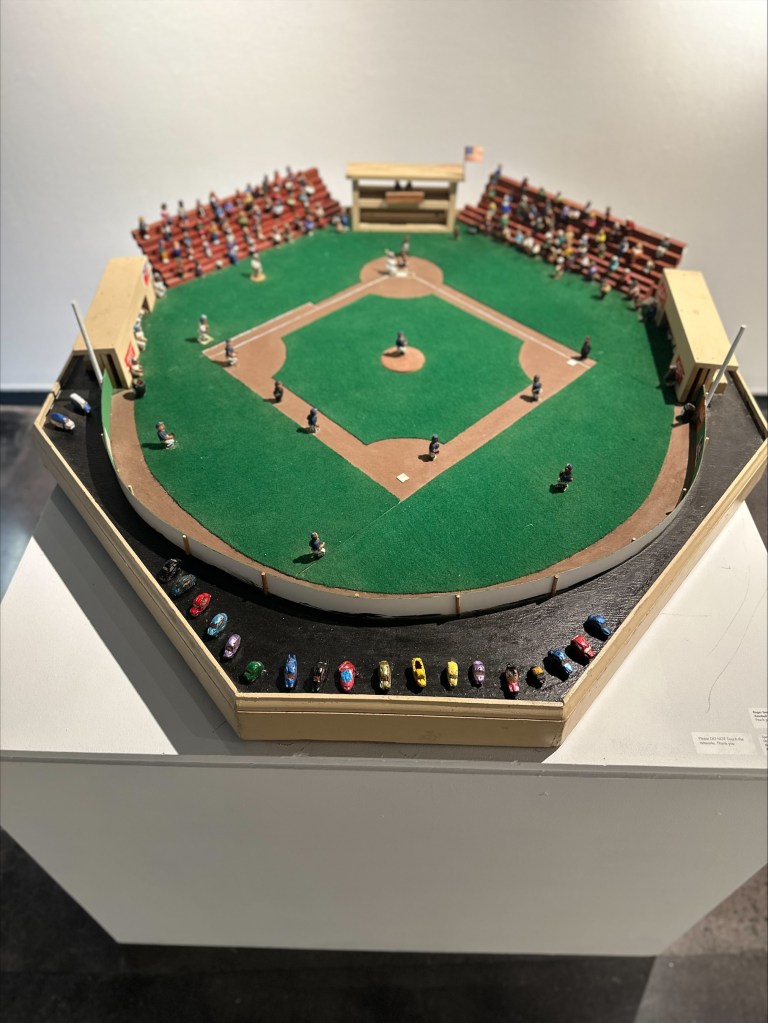
Baseball was alive and kicking. I, too, was a part of this great pastime, because I played back catcher. After the integration of the colored and white school, other sports were played by the colored folk, too. Games such as tennis, golf, and softball for the girls. All of the sports were well-organized. They had good training facilities. This was very different from the “sandlot” or “open field” that we once knew. In the past, everyone got a chance to play, but this changed with the times. Today’s sports are so competitive that many mediocre students never get to enjoy the baseball game that we knew as a child while growing up in the south. Not only did the game of baseball change, but so did our name. We changed from being called Negroes, to Colored people, to blacks and today, we are called African-Americans. We no longer have to sit at the back of the bus, we can sit where we want and enjoy the ride. We no longer attend one-room schoolhouses, taught by one teacher, but schools that are filled with teachers of all subject areas. Since I loved the sport of baseball, I combined my love of baseball with my hobby of carving peach seeds into people and things. Although I began carving in 1968, my love of peach seed carving flourished in the late 1980’s and the early 1990’s. When I began to carve my baseball stadium, the first pieces that I carved were the pitcher, a catcher, and a batter. I later added the umpire, a first baseman, a second baseman, a short stop, and a third baseman. Then I saw the need to add first and third base umpires. Later on, I decided to add the opposing team members and a dugout. This was a tedious project, but it was well worth it, when the completed project was done. When the Toronto Blue Jays and the Atlanta Braves went to the World Series, I knew my job was not complete. I began to make my peach seed carvings look just like them. By now, I felt the need to add a press box, vendors, a security guard. This has been a tedious journey, but I have loved it all the way. I have done carvings of other things, but to me, this has been my greatest carving achievement. It took a while to bring to life, and I know for myself that there is always room for improvement. Although, I doubt that the stadium will ever be complete to me, I keep adding more details. This is a hobby that I truly enjoy. I hope that those who get to see my baseball stadium and the teams carved from peach seeds, will enjoy it as much as I have creating it.”
 CRAFTING BLACKNESS
Leave a comment