
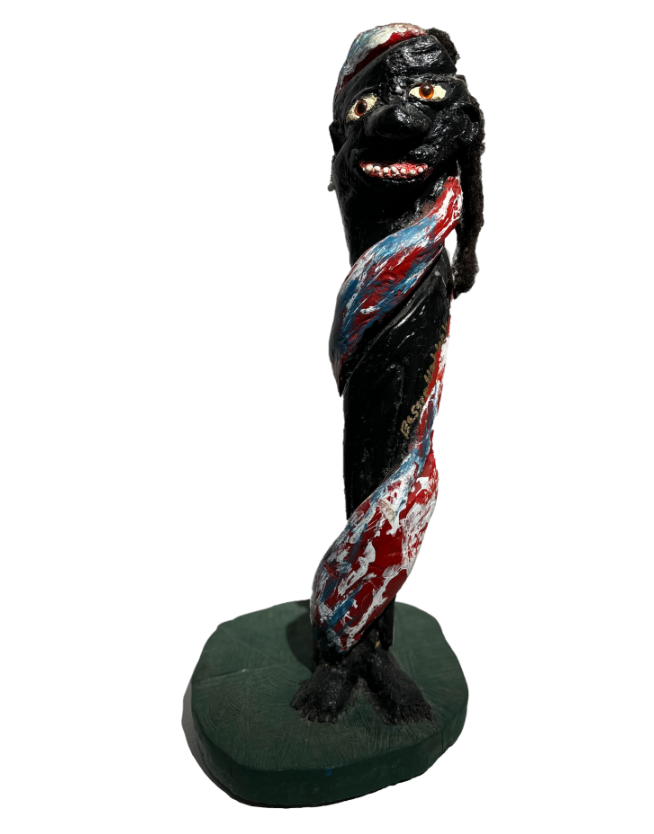
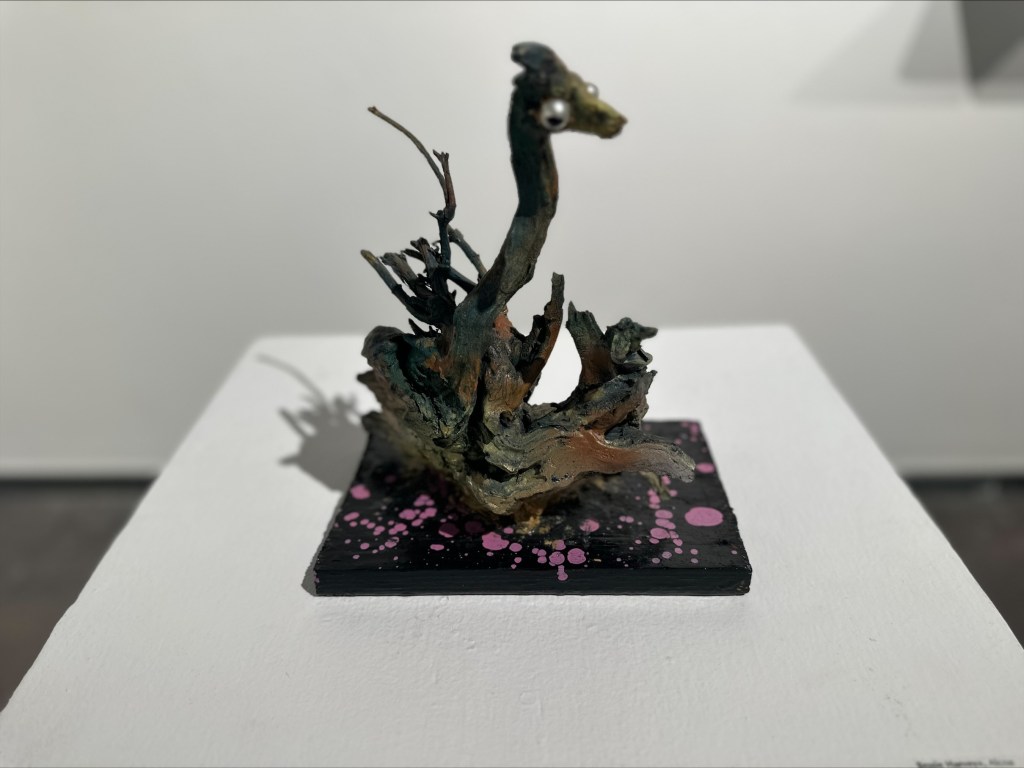
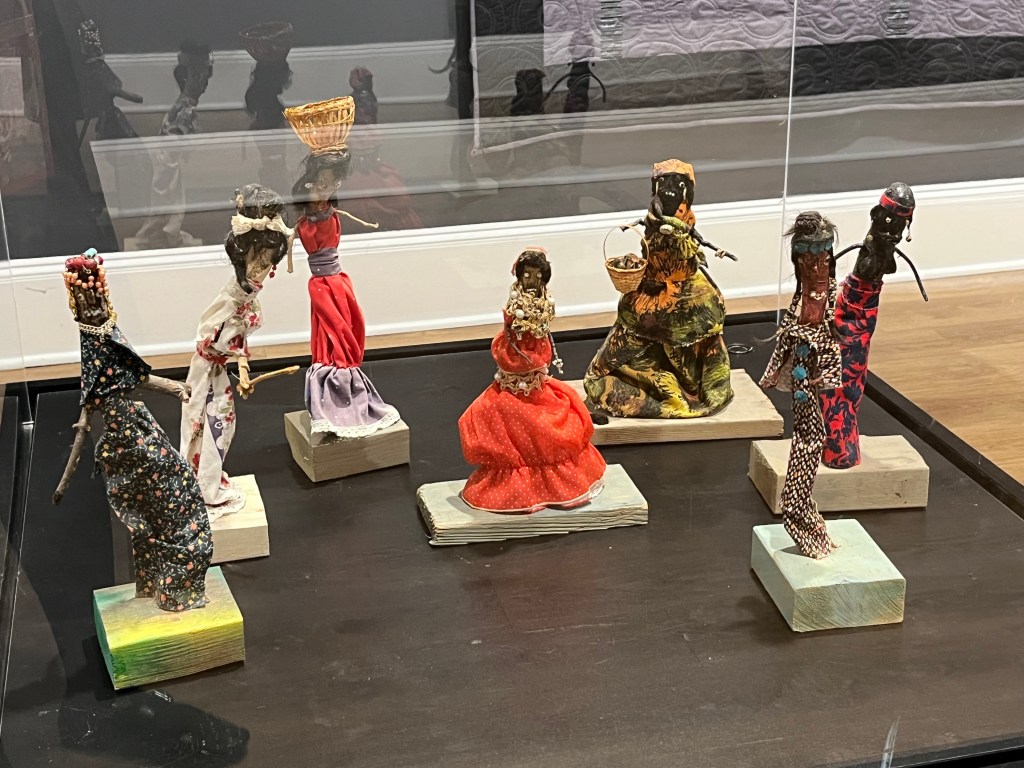
Seven Sisters of the World | Mixed Media on Wood | Bessie Harvey | Collection of Knoxville Museum of Art, Gift of Glady and Ross Faires 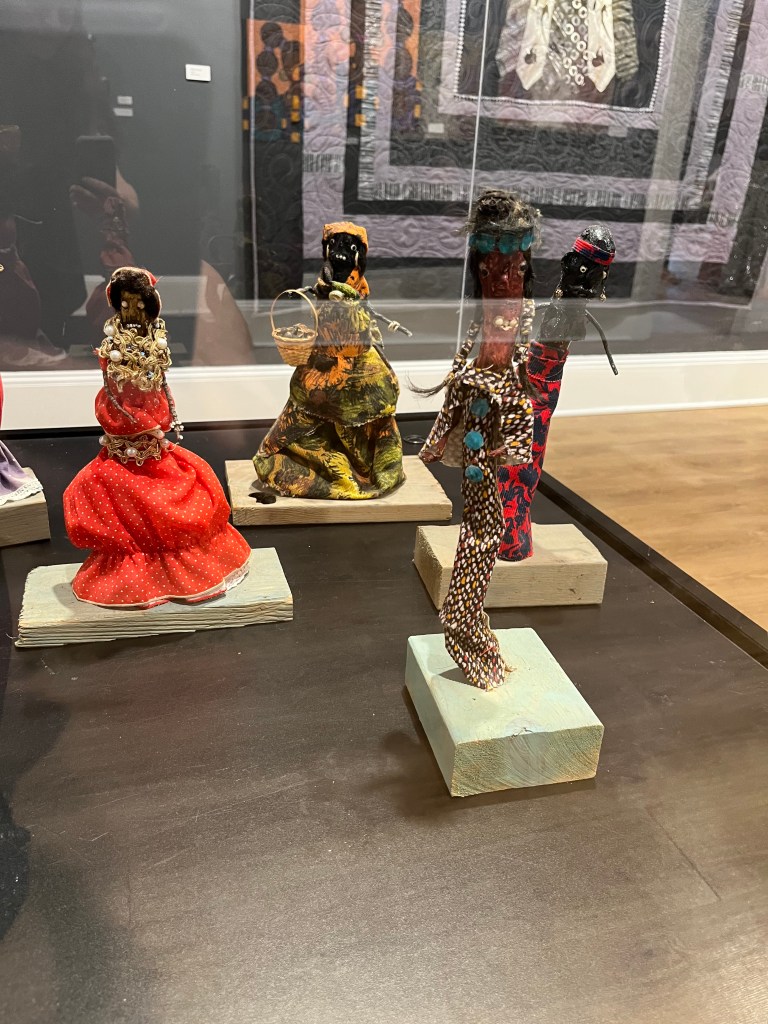
Seven Sisters of the World | Mixed Media on Wood | Bessie Harvey | Collection of Knoxville Museum of Art, Gift of Glady and Ross Faires 
Seven Sisters of the World | Mixed Media on Wood | Bessie Harvey | Collection of Knoxville Museum of Art, Gift of Glady and Ross Faires
- Born: 1929
- Active: Alcoa (Blount County)
- Died: 1994
- Region: East
- Mediums: Mixed Media, Wood
- Website | Instagram | Facebook
Bessie Harvey
A new creative voice in the region emerged in Alcoa, Tennessee, in the late twentieth century. Entirely self-taught, Bessie Harvey (1929–1994) used little more than roots, sticks, shells, and paint to assemble a diverse cast of spirited figures—biblical characters, African ancestors, mythological creatures—infused with uplifting messages of human perseverance and divine compassion.
Harvey’s artistic process occurred through an intensive collaboration with natural and supernatural forces. Often spending hours at a time outdoors, she began to discern faces in trees, clouds, weathered panels, and gnarled branches. To her, the faces represented spirits planted by God and shaped by nature. She discovered that the only way to dispel them was to give them physical form. Harvey’s work soon became well-known to family, neighbors, and other community members.
Having established a fully functional studio by 1978, Harvey secured a suitable creative space and her work soon began to attract the attention of artist friends, collectors, dealers, and museums. By the early 1980s the artist’s creations evolved in size and intricacy. Various pieces of wood were soon combined to construct larger and more elaborate sculptures. Some were formed out of tree stumps from which individual branches emanated, each fashioned into an independent figure formed of various materials. These larger works provided Harvey with an expanded structural format capable of supporting more complex narratives. At the same time, Harvey began a series of small sculptural tableaux, Africa in America, that embodied her extensive experience as a Southern woman of color who grew up in the pre-Civil Rights era.
Reflecting the scope and force of her intellect, Harvey’s cast of biblical and ancestral characters is empowered by her own personal experience and infused with moral concepts of universal significance.
Source: Stephen C. Wicks, Knoxville Museum of Art
 CRAFTING BLACKNESS
Leave a comment